Glaucoma Treatment & Management
Protect Your Vision from the Silent Thief of Sight
Glaucoma is a leading cause of irreversible blindness, but with early detection and proper treatment, vision loss can be prevented. Our expert team uses the latest diagnostic technology and treatment methods to help you preserve your sight.
Understanding Glaucoma
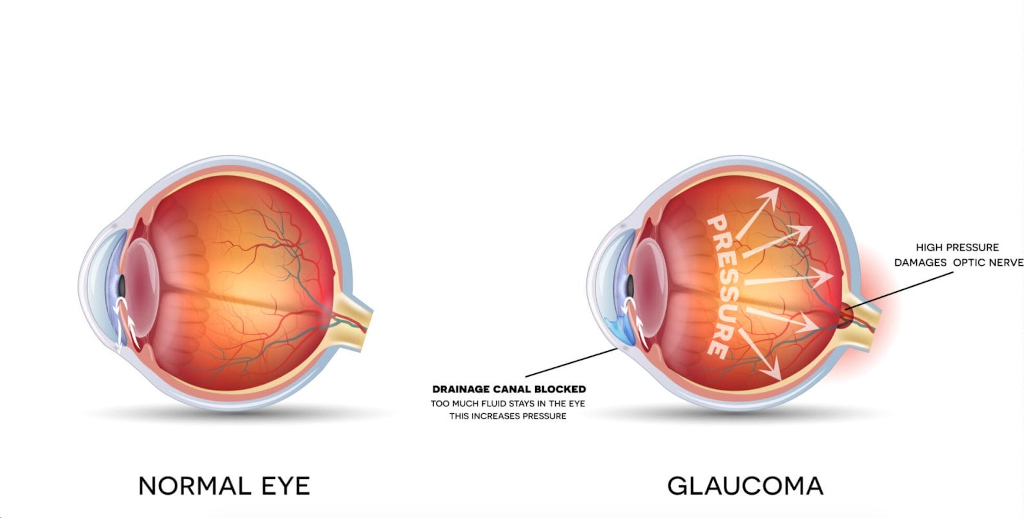
Glaucoma is often called the "silent thief of sight" because it typically has no early warning signs. It's a group of eye diseases that damage the optic nerve, which connects your eye to your brain and is essential for good vision.
This damage is usually caused by abnormally high pressure inside the eye (intraocular pressure or IOP). When fluid in the eye doesn't drain properly, pressure builds up and can damage the optic nerve fibers, leading to vision loss.
While glaucoma cannot be cured and vision loss cannot be reversed, early detection and treatment can preserve your remaining vision and slow or stop the progression of the disease. This is why regular comprehensive eye exams are so important.
Important to Know
Most people with glaucoma don't experience symptoms until significant vision loss has occurred. Once vision is lost to glaucoma, it cannot be restored. Regular eye exams are the only way to catch glaucoma early.
Types of Glaucoma
There are several different types of glaucoma, each with unique characteristics and treatment approaches
Open-Angle Glaucoma
The most common form, developing slowly over time when the eye's drainage canals become clogged. Often has no early symptoms.
Angle-Closure Glaucoma
Occurs when the iris blocks the drainage angle. Can develop suddenly (acute) or gradually (chronic) and requires immediate treatment.
Normal-Tension Glaucoma
Optic nerve damage occurs despite normal eye pressure. May be related to poor blood flow to the optic nerve.
Congenital Glaucoma
Rare condition present at birth due to abnormal eye development. Requires prompt surgical treatment.
Signs & Symptoms
Most types of glaucoma have no early symptoms. By the time you notice vision changes, permanent damage has already occurred. However, some symptoms to watch for include:
Are You at Risk?
Certain factors increase your risk of developing glaucoma. If any of these apply to you, regular eye exams are especially important:
Important: If you have any of these risk factors, the American Academy of Ophthalmology recommends more frequent eye exams to catch glaucoma early when treatment is most effective.
Treatment Options
While glaucoma cannot be cured, these treatments can help lower eye pressure and prevent further vision loss
Eye Drops
Prescription medications to lower eye pressure by reducing fluid production or improving drainage.
Laser Therapy
Procedures like selective laser trabeculoplasty (SLT) or laser peripheral iridotomy to improve fluid drainage.
Surgery
Trabeculectomy or drainage implants create new pathways for fluid to leave the eye when other treatments aren't effective.
Combination Therapy
Many patients benefit from a combination of medications, laser treatments, and ongoing monitoring.
The Importance of Treatment Compliance
Successfully managing glaucoma requires ongoing commitment. Most patients need to use daily eye drops for the rest of their lives, even when they feel fine. Missing doses can cause eye pressure to rise and lead to further vision loss.
Our team will work with you to find a treatment plan that fits your lifestyle and help you stay on track with regular monitoring appointments. Early detection and consistent treatment are the keys to preserving your vision.
Advanced Treatment Options
Beyond eye drops, we offer the full range of cutting-edge glaucoma treatments
Glaukos iDose
Sustained-release travoprost implant for continuous IOP lowering
Alcon Hydrus Microstent
Scaffold implant that opens Schlemm's canal to lower eye pressure
Surgical Options
Glaucoma tube shunts and trabeculectomy
Traditional and proven treatments
Expert Glaucoma Care
Our experienced ophthalmologists specialize in the diagnosis and management of glaucoma
Advanced Diagnostics
State-of-the-art equipment for accurate pressure measurement and optic nerve imaging
Experienced Specialists
Board-certified ophthalmologists with extensive glaucoma management experience
Comprehensive Care
From diagnosis through treatment and ongoing monitoring, we're with you every step
Glaucoma FAQs
Get answers to common questions about glaucoma